Sitemap
A structured list of the public pages, posts, and collections available on this site. An XML sitemap is also available for search engines.
Pages
Posts
Do You Know the Finite Element Method?
Published:
A technical introduction to FEM history, formulation, discretization, assembly, and engineering applications.
From Stone to Self-Healing Bacterial Concrete
Published:
A visual introduction to construction materials, durability, and self-healing concrete technologies.
Is the E.030 Standard Enough?
Published:
A reflection on seismic design standards, historical earthquakes, and the limits of code-based safety.
Why Should We Learn to Program?
Published:
Why programming matters for civil engineering, construction technology, automation, and professional growth.
The End of Earthquakes?
Published:
A discussion on magnetorheological isolators, adaptive seismic protection, and future structural systems.
Understanding ChatGPT and Its Application in Construction
Published:
A practical overview of GPT models, their limits, and possible applications in construction workflows.
portfolio
publications
talks
Rompiendo Esquemas en la Ingeniería Civil: La Revolución de la Inteligencia Artificial
Published:
In this talk, I aim to transform the conventional mindset on how engineering problems are approached. By introducing a new paradigm of thinking about artificial intelligence and its applications, I seek to raise awareness of the profound influence technology has on our daily lives. Additionally, I offer a fresh perspective on the future of civil engineering, emphasizing the critical role AI will play in shaping the industry. This presentation challenges traditional methods and encourages a forward-thinking approach that aligns with the evolving landscape of technology and engineering.
Tecnificación y Evolución en la Construcción
Published:
In this discussion, co-hosted with Ing. Sergio Arriaran, we critically examined why the construction industry, despite its rich history and evolution, is often perceived as less technified compared to dynamic sectors like the film industry. The event delved into how civil engineering, from its origins to the modern era, has integrated emerging technologies, particularly artificial intelligence. We explored the future challenges and opportunities, analyzing the role of humans in a technologically advanced context and the necessary adaptation in university education to address these transformations. The goal was to understand and propose solutions to the technological gap in construction.
Inteligencia Artificial para Dummies
Published:
In this talk, I addressed fundamental aspects of artificial intelligence, starting with a brief history and moving through key concepts such as Web 2.0, Big Data, Deep Learning, and Machine Learning. I explained how AI functions and its applications in civil engineering, while also offering a critique of current practices in the field. The objectives of the talk were to transform traditional approaches to engineering problem-solving, introduce a new paradigm of thinking about artificial intelligence and its use, raise awareness about the impact of network technologies on people's lives, and provide a fresh vision for the future of civil engineering.
Webinar: Análisis Modal Espectral con Python
Published:
This webinar was conducted to launch the course "Spectral Modal Analysis with Python." The objectives of the webinar were to explain what Spectral Modal Analysis is and its importance in engineering for understanding how structures respond to vibrations and dynamic loads. Additionally, I demonstrated how Python and its libraries such as NumPy, SciPy, and Matplotlib facilitate the efficient spectral modal analysis. Practical examples were provided, showcasing how to use Python to perform and interpret Spectral Modal Analysis.
teaching
Fundamentos de la Metodología BIM y su Implementación en la Administración Pública de Latinoamérica
Recorded course, TEDI, 2023
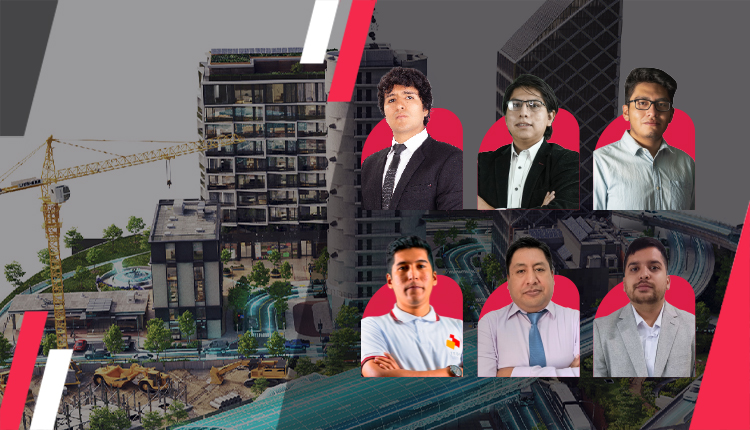
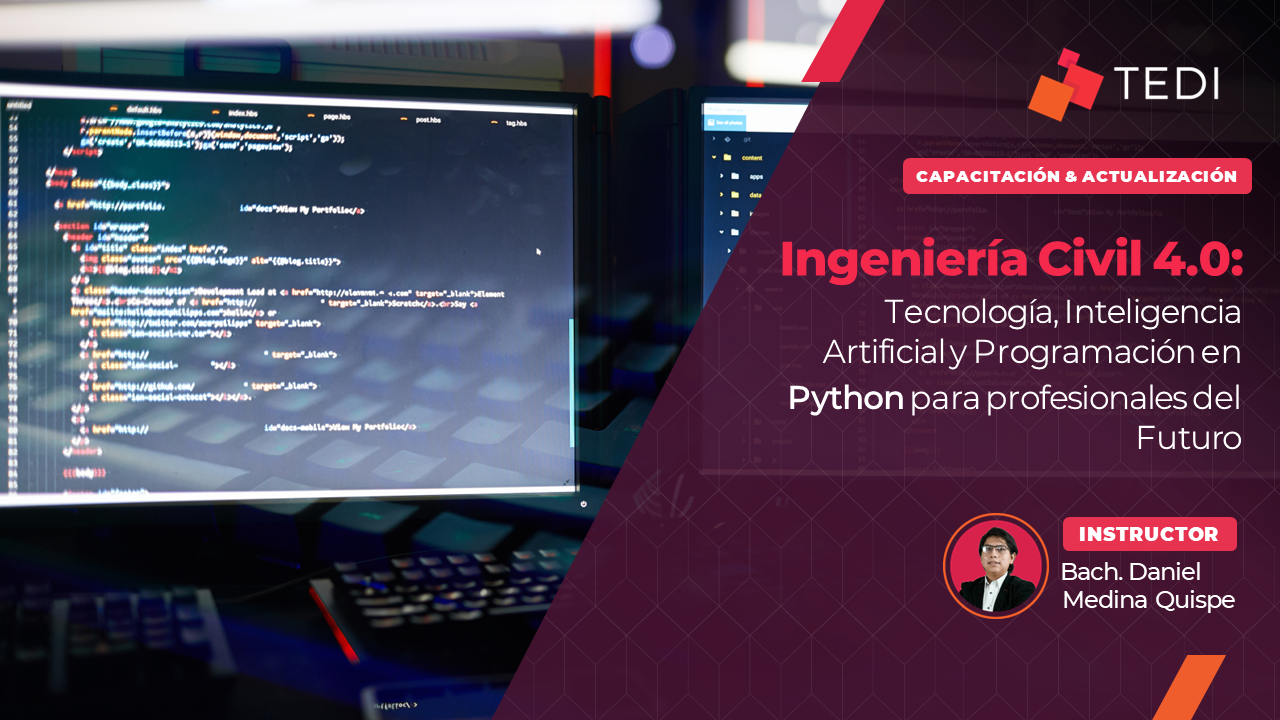
Ingeniería Civil 4.0: Tecnología, Inteligencia Artificial y Programación en Python para Profesionales del Futuro
Recorded course, TEDI, 2023
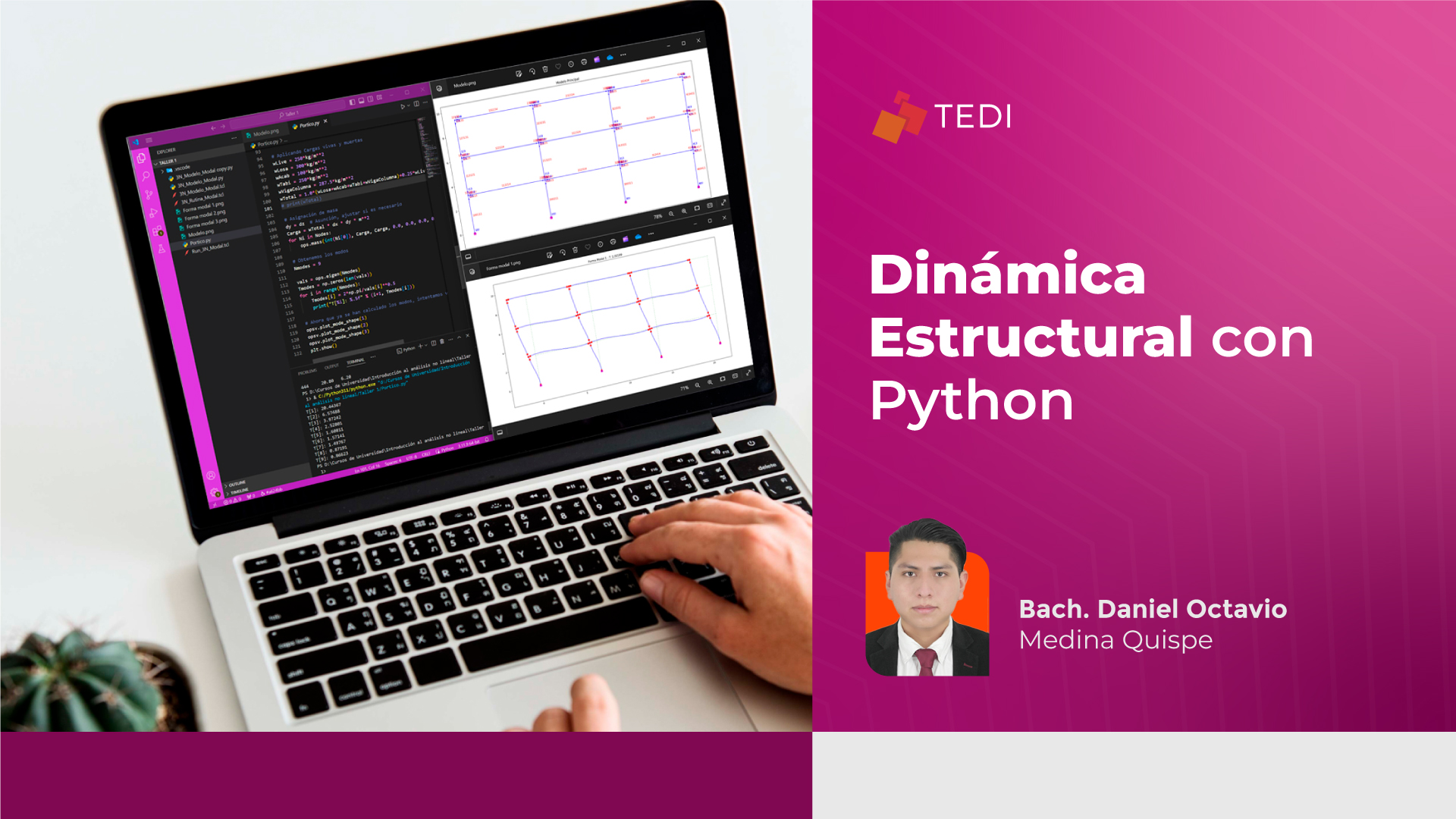
Dinámica de Estructuras con Python
Recorded course, TEDI Online, 2024
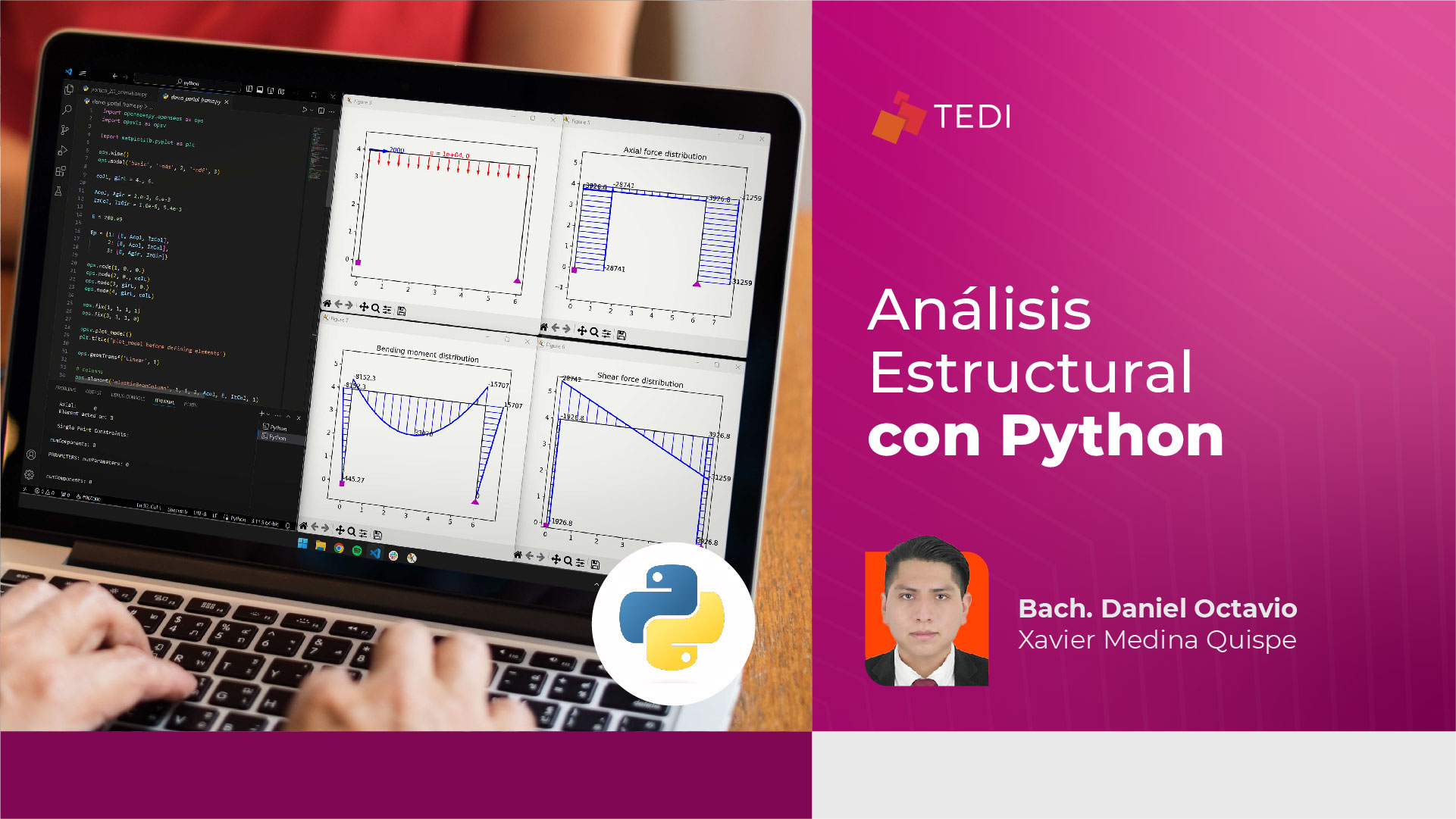
Análisis Estructural con Python
Recorded course, TEDI Online, 2024